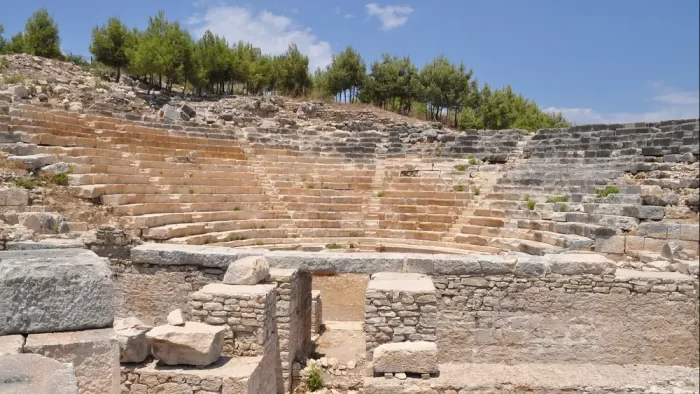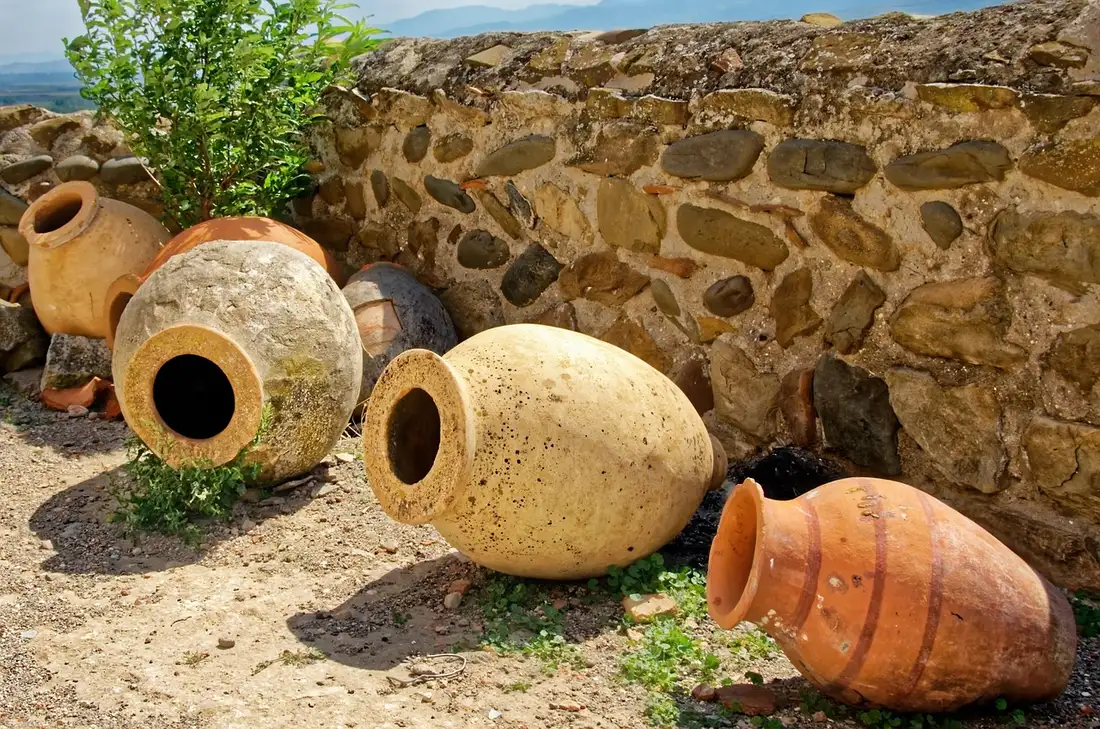
The agricultural revolution and the emergence of wine occurred almost simultaneously in the South Caucasus. We don’t know how Neolithic Caucasians reacted to the intoxicating effects of fermented grape juice, but it’s clear that it wasn’t seen as a mere beverage. Wine quickly acquired spiritual meanings and became associated with the gods. Caucasians, having learned the intricacies of winemaking, brought this craft to the Eastern Black Sea region with the communities migrating westward. Professional viticulture in the Eastern Black Sea region’s excessive rainfall and rugged terrain was a challenging process, especially at the time. Despite this, the Black Sea people, renowned for their stubbornness and daring, even then exerted all their skill and managed to establish a significant place in winemaking.
Geographical, Geological and Climatic Analysis of the Eastern Black Sea Region in Terms of Viticulture
In describing the topographic structure of the Eastern Black Sea region, it would be appropriate to begin with the steep mountain ranges that begin just after the coastline and extend into the interior.
The mountain ranges in the Eastern Black Sea region, which were formed by the Alpine orogeny at the end of the Mesozoic and exceed 3000 meters in height at many points, cause significant climate changes between the coastal areas and the inland areas as they extend parallel to the sea.1 A temperate, extremely rainy climate prevails along the narrow coastal strip, but a continental climate rapidly takes hold as one moves away from the sea. Because the mountain ranges rise like a wall from the coast, moisture is confined to a small area. This creates significant climatic differences between coastal areas and inland areas. So much so that, while temperatures in any coastal district in June vary between 15-25°C, snowfall can be observed from time to time in the plateaus located approximately 30 km inland as the crow flies.

The southern borders of the Eastern Black Sea region can be delimited by the Çoruh-Kelkit Valley. North of this valley lie the Giresun Mountains and the Kaçkar Mountains. Elevations exceed 3,400 meters at Altıparmak Peak, 3,700 meters at Verçenik Peak, and 3,900 meters at Kavrun Peak, all part of the Kaçkar Mountains. To the south lie the Çimen, Kop, Mescit, and Yalnızçam Mountains, as well as the Erzurum-Kars Plateau.
The Eastern Black Sea region’s heavy rainfall throughout the year is generally considered a disadvantage for viticulture. While this is partially true, generalizations encompassing the entire region are misleading. Viticulture is not a craft that can be evaluated solely based on rainfall averages. Humidity levels during the grape harvest, wind patterns during the flowering phase, or the risk of late spring frost are arguably more decisive than annual averages. It’s also important to consider the impact of microclimate. Ultimately, although the steep southern slopes of Trabzon’s Maçka district and the Şavşat basin in Artvin are located within similar climate zones, their viticulture potential is quite different.

Another important factor is slope. Land throughout the Eastern Black Sea region is rarely flat. This isn’t a handicap for viticulture; in fact, considering the agro-meteorological conditions in the region, it could even be considered an advantage. This is because precipitation is more easily transferred to surface runoff on sloped land, ensuring soil drainage and minimizing problems such as root rot. The terraced vineyard method, common in Spain, Italy, and Switzerland, is successfully implemented on similar slopes.
The ground of the Eastern Black Sea region is based on young geological formations enriched with volcanic tuffs. Basaltic lava flows and andesite rocks dating to the Paleocene and Eocene periods are common in the area extending from Rize to Artvin. These soils, developed on volcanic bedrock, are generally associated with high acidity, vibrant aromas, and distinct mineral character in wine grapes. (The Etna wine region in Italy is a prime example.) Of course, this is only possible with the use of suitable grape varieties and the right training systems.
History of Winemaking and Viticulture in the Eastern Black Sea Region
Protohistoric Era
While concrete evidence of farming and alcohol production in the Eastern Black Sea region during the Neolithic Age is limited, excavations in the neighboring South Caucasus region are quite illuminating. For example, chemical analyses of earthenware vessels from early Neolithic settlements such as Gadachrili Gora and Shulaveri in Georgia have identified traces of tartaric acid, indicating that wine was stored in these vessels, dating to between 6000 and 5500 BC.2
The traditional Georgian winemaking tradition, characterized by the burying of wine jars, eventually spread to the villages of the Eastern Black Sea region via the Laz and other Caucasian communities. Indeed, the remains of buried wine jars are still found in the Ardanuç and Yusufeli districts of Artvin.
By the Bronze Age, between 3000 and 1200 BC, viticulture in the Eastern Black Sea region began to become more systematic. Grapes are thought to have been consumed both as fruit and as a fermented beverage in the region, which lies on trade routes between Eastern Anatolia and Transcaucasia. The frequent occurrence of Vitis vinifera pollen in archaeological layers dating to the Early Bronze Age in the eastern part of the region (in the South Caucasus) supports this view.3 Additionally, Stephen D. Batiuk, a senior research associate at the University of Toronto, has suggested that wine culture held an important place in the Kura-Araxes Culture, which included the eastern and southern parts of the Eastern Black Sea region.4
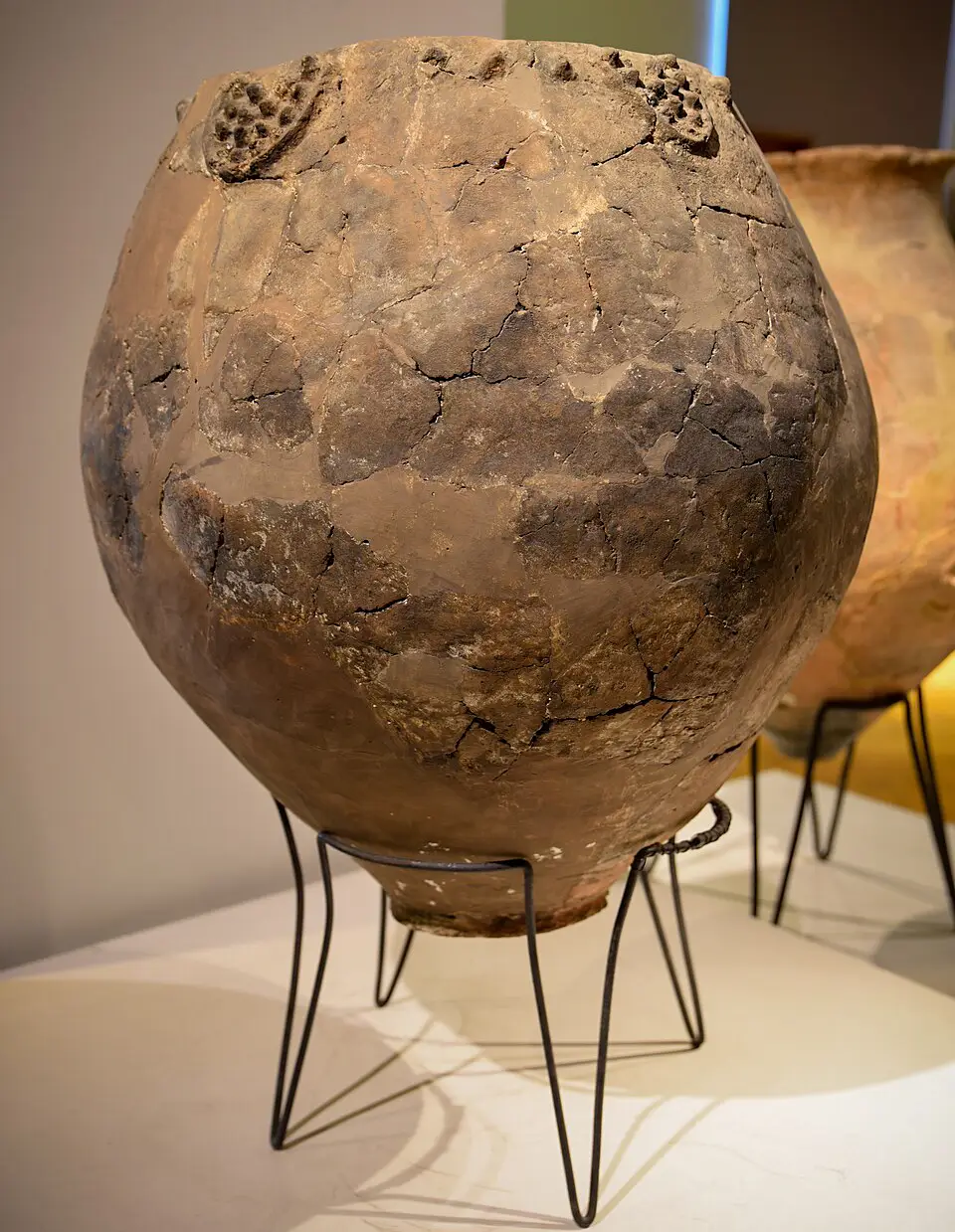
Image Credit: Carole Raddato (Flickr) ©️CC BY-SA
The Pagan Era: The Kingdom of Colchis, the Greek Colonies, and the Roman Empire
Colchis, famous in Greek mythology for the legend of the Golden Fleece, is depicted in the Argonauts story as a mysterious land encompassing what is now western Georgia and northeastern Türkiye, ruled by King Aietes. In his famous work Anabasis, Greek historian and philosopher Xenophon described how the Greek soldiers known as the Ten Thousand received gifts of wine and food from the local people as they passed through Trapezus on their return journey from Persian lands.
The colonization of the Eastern Black Sea region by the Milesians began in the 8th century BC. Initially small trading ports, cities like Trapezus and Kerasus evolved over the following centuries into centers where advances in viticulture techniques and logistical advances overflowed the coast with wine amphorae. Many cities, such as Kerasus (Giresun), Kotyora (Ordu), Trapezus (Trabzon), Dioskurias (Sukhumi), and Phasis (Poti), became part of the Mediterranean-Black Sea trade network.
When the Pontic Kingdom took control of the Eastern Black Sea coast in the 1st century BC, winemaking activities in the region developed through a more organized system. King Mithridates VI, by integrating both the local population and Hellenistic colonies, initiated the construction of a relatively strong wine economy in the eastern Black Sea region. The cult of Dionysus in the region gained widespread popularity during this period. The discovery of protomes of Dionysus, the Greek god of wine, dating from the reign of Mithridates VI at Kurul Castle in Ordu in 2024 provides archaeological confirmation of this situation.5
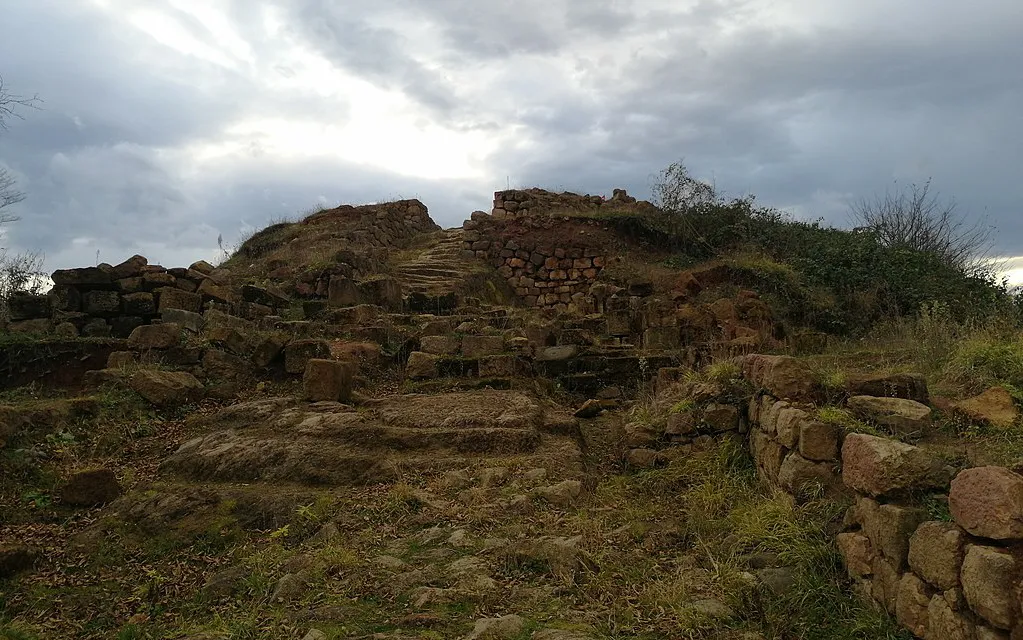
Image Credit: Umutcan Bilgin (Wikimedia) ©️CC BY-SA 4.0
In 65 BC, Roman rule began in the Eastern Black Sea region with Gnaeus Pompeius Magnus’s defeat of Mithridates VI. With the Roman army’s entry into Trapezus, the Eastern Black Sea region gained the opportunity to establish direct and regular relations with the Western world for the first time. However, although remains of Roman-style amphorae have been found in archaeological excavations in the region, the unusual flavor of Black Sea wine prevented its access to the West, which was accustomed to Mediterranean wine.
Winemaking in the Eastern Black Sea region had made significant strides during the Pontic and Roman periods. Local wine trade was even steadily increasing, but it still lagged far behind Mediterranean wines in terms of production scale and popularity. Furthermore, Black Sea wines often seemed quite different and harsh to those accustomed to Mediterranean wines. Consequently, they were often consumed diluted.
The Christian Era: The Roman Empire, the Georgian Kingdom, and the Empire of Trebizond
Shortly after the Migration of Tribes, with the death of Emperor Theodosius in 395 AD, Rome was officially divided between his sons, Honorius and Arcadius. The Eastern Black Sea region, now part of the Byzantine Empire, became a target of missionary movements aimed at the spread of Orthodox Christianity from the early 5th century onwards. In response to this push, paganism retreated inland, but small monasteries established by Byzantine monks gradually allowed Christianity to penetrate the countryside.
During the Byzantine Empire and the Georgian Kingdom, viticulture received significant support from religious institutions. Due to the use of wine in Christian liturgy, monasteries and churches became heavily involved in viticulture and wine production. While the majority of monastery vineyards were concentrated around Yomra, estates spread as far east as Of and Rize and west to the highlands of Akçaabat and Maçka.6
Winemaking in the Eastern Black Sea region experienced its golden age during the Empire of Trebizond. By the late 13th century, Black Sea wine had transcended local and regional boundaries and become an internationally recognized commodity. Its price had risen, but it had found its place in foreign trade. The northern and western shores of the Black Sea, particularly Crimea, were the most important export destinations for Black Sea wine.7
By the early 15th century, wine shipments from the eastern Black Sea to the northern and western coasts had intensified to such an extent that they provoked a reaction from Genoese merchants. The Trebizond-Genoese conflict that erupted in the following years resulted in the defeat of the Empire of Trebizond after lengthy negotiations and military engagements. Following the conflict, a compromise was reached between the parties, which agreed to pay Trebizond Emperor Alexios IV’s war compensation in wine and hazelnuts.8
The Islamic Era: The Ottoman Empire
While these events were unfolding along the Black Sea coast, a new power was emerging in Western Anatolia and the Balkans: the Ottoman Empire. Mehmed II, who brought an end to the Byzantine Empire with his conquest of Constantinople in 1453, also brought about the fall of the Empire of Trebizond with a campaign along the Black Sea coast approximately eight years later. This shift, naturally, ushered in radical changes. The Eastern Black Sea region, where Christianity had been dominant for nearly a thousand years following the pagan era, was now formally integrated into the territory of a Muslim state. Mehmed II implemented a resettlement policy, placing Turkish families in the region, but refrained from enforcing any policies of religious oppression or forced assimilation against Christians.
Viticulture continued after the conquest, organized largely along ethnic lines, as documented in the records of the period. Grape cultivation, particularly widespread in the high valleys and hillsides of Trabzon and its surroundings, was predominantly controlled by non-Muslim subjects such as Greeks, Armenians, and the Laz. The Muslim families who had been settled in the region did not participate in viticulture and, under Ottoman law, faced strict restrictions on wine production and consumption. Still, the extent to which these restrictions were applied in communities where Greek, Armenian, Laz, and Turkish families lived so closely together that they shared the same mill remains uncertain.
The Ottoman state adopted a generally lenient approach toward non-Muslims regarding wine production and consumption—not only in the Eastern Black Sea region, but across the empire. Nonetheless, efforts were made to ensure that wineries and taverns did not operate in the immediate vicinity of Islamic institutions.9
By the 16th century, trade in the Black Sea was almost entirely under Ottoman control. The port of Trabzon had become a major hub for both domestic and international trade in wine and grape-based products. However, wines exported from the Eastern Black Sea during this period were generally considered of low quality. The failure to keep up with modern developments in production techniques meant that Black Sea wines fell short of Mediterranean standards. Despite this, Black Sea wine held a stable place in regional trade. Shipments, particularly to the northern ports of the Black Sea, would continue for some time.
From the early 17th century onward, Black Sea winemaking began to decline under the influence of foreign competition. The easy access of Mediterranean wines to northern ports dealt a significant blow to local production in Trabzon and the surrounding area. In response, local producers attempted to find a market niche by producing alternative grape products such as brandy and molasses. Unable to compete with Mediterranean wines in terms of quality, lower-quality grapes were distilled or boiled, but this did not yield the desired results in the long run.
Unfortunately, the decline in wine exports did not remain a temporary setback and continued steadily in the following periods. Black Sea wine, once a subject of international trade, was initially limited to a regional presence, and later became a solely local presence.
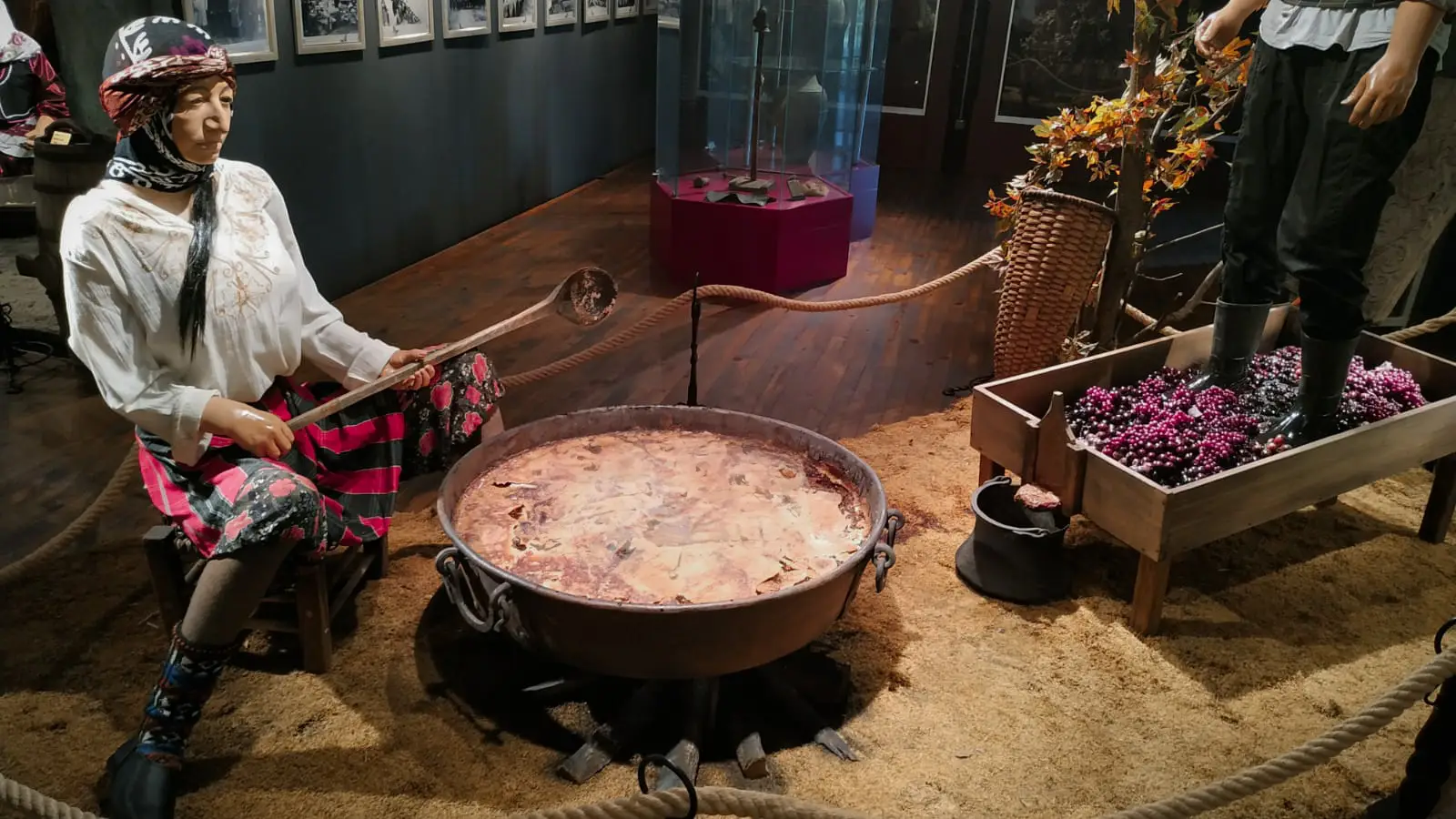
(Museum of Natural Life, Çayeli, Rize)
Image Credit: Ulukayin.org ©️CC BY-SA 4.0
The Secular Era: The Republic of Türkiye
In 1923, in accordance with the Convention Concerning the Exchange of Greek and Turkish Populations, a reciprocal population exchange was carried out between Türkiye and Greece, with certain exceptions. This exchange involved Turks living in Greece (excluding Western Thrace) and Greeks living in Türkiye (excluding Istanbul, Bozcaada, and Gökçeada). This step, driven by demographic concerns, a desire for reconstruction, and political interests, also brought about economic problems.10
At the beginning of the 20th century, winemaking in the Eastern Black Sea region was largely carried out by Greeks. Therefore, the population exchange marked the final breath of life for Black Sea wine. Monastery vineyards gradually fell into disuse, and their production traditions gradually faded into the dusty pages of history.
Although state-sponsored policies aimed at reviving viticulture were adopted in the early years of the modern Republic of Türkiye, founded under the leadership of Mustafa Kemal Atatürk, the Eastern Black Sea region remained outside these plans. Agricultural reforms focused primarily on Central Anatolia and the Aegean region, while Black Sea people turned to alternative agricultural products such as hazelnuts and tea.
Winemaking became official in the Republic of Türkiye thanks to the establishment of TEKEL (Turkish Tobacco and Alcoholic Beverages Company) in 1925. The government encouraged the breeding of local grapevine varieties and established wineries in Tekirdağ, Ankara, Nevşehir, and Elazığ. While private direct investment in the Black Sea region remained limited, some viticulture experiments were conducted with village institutes and local cooperatives. In general, grape producers were supported between 1923 and 1950, and winemaking was systematically addressed, along with the seedless raisin project for export.11
While viticulture is relatively underrepresented in the Eastern Black Sea region today, there are ongoing efforts to revive traditional heritage. For example, boutique wine production is underway in Tokat, Artvin, and Giresun. These limited but distinctive productions, using local grape varieties, are seen as important steps both for diversifying regional agriculture and preserving cultural heritage.12
Black Sea Terroir
In wine terminology, terroir is the sum total of environmental factors such as soil, climate, altitude, and microclimate that determine the grape’s character. In this context, when discussing the Black Sea terroir (especially the Eastern Black Sea region), the first factor to consider is climate.
According to the Köppen climate classification, the Eastern Black Sea region is characterized by a “subtropical” and “oceanic” climate. In the valleys near the coast, annual rainfall varies between 1000 mm and 2500 mm. The highest rainfall occurs in October and November, while the least rainfall occurs in May and June. Annual temperatures range from 0°C to 30°C. Cloudy weather generally prevails. However, as mentioned at the beginning of this article, the climate becomes cooler and more continental as one moves inland.
In the Eastern Black Sea region, south- or southwest-facing slopes are generally preferred for viticulture. The main advantages of these slopes are:
- Maximum benefit from sunlight
- Drainage against excessive rain
- Prevention of root rot
Soil Structure
Brown forest soils, podzolic soils, and lateritic soils are generally found in the Eastern Black Sea region. Brown forest soils are the most widespread. These soils, which develop under forest cover, are rich in nutrients and are highly suitable for viticulture. Podzolic soils, which generally form at higher elevations and under coniferous forests, are not preferred for viticulture because they are poor in nutrients. A similar situation applies to lateritic soils found along the coast. Although lateritic soils are rich in organic matter, they are also poor in nutrients. They are acidic due to excessive leaching and are more suitable for tea and kiwi cultivation.
Suitable Wine Grapes for the Eastern Black Sea Terroir
White Wine Grapes
Chardonnay: It is a grape that can adapt to temperate climates and is resistant to humid conditions. However, Chardonnay vineyards should be planted on well-drained, south- or southeast-facing slopes whenever possible. Medium-bodied, balanced wines with apple-lemon aromas and hazelnut/butter notes can be obtained when fermented in oak barrels. Early harvesting preserves vibrant acidity, while over-ripening can reveal richer fruit flavors.
Riesling: A grape accustomed to cool, rainy summers, Riesling thrives in the humid climate of the Eastern Black Sea region, particularly on steep, south-facing slopes. Gravelly or humus soils with plenty of sunlight and low altitude should be preferred. Due to the rustic climate, caution should be exercised against mold. The Çamlıhemşin and Şavşat districts are suitable.
Gewürztraminer: It adapts well to the relatively cool but sunny transitional periods of the Eastern Black Sea region. Mid-altitude southern slopes are suitable for avoiding high humidity. High acidity can be maintained by harvesting relatively early. Harvest should be done before heavy rainfall, otherwise the risk of fungal diseases increases.
Grüner Veltliner: Originating in Central Europe, this grape variety is known for its peppery, green-fruity aromas. It generally produces a light- to medium-bodied wine. Calcareous, humus-rich forest soils and southern slopes are suitable. Due to the risk of excessive rainfall in the region, well-drained soils should be preferred to prevent root immersion.
Red Wine Grapes
Pinot Noir: Thin-skinned Pinot Noir grows best on steep, south-southwest-facing slopes in the Eastern Black Sea region. A balance of sea coolness and sunshine produces elegant, medium-bodied red wines with cherry and blackberry aromas. Because it is susceptible to fungal diseases, careful spacing between plants is essential. It has a high chance of success around Ardanuç.
Cabernet Franc: Its early ripening ability, which is more suited to relatively cool conditions, can be used to its advantage in the Black Sea climate. Sunny slopes and warm valley areas are preferred. When matured in oak barrels, it acquires aromas resembling red fruit, green pepper, and tobacco. While the risk of phylloxera is low in humid climates, precautions should be taken against fungal diseases in rainy autumns.
Saperavi: This grape variety originates from Georgia and is well-suited to the Black Sea climate. Its colorful interior skins produce dark-bodied wines. Given the geoclimatic similarities between western Georgia and the Eastern Black Sea region, it can be sampled in the Borçka and Murgul districts of Artvin.
Isabella: It’s a fragrant, indigenous grape variety native to Western Georgia and Northeastern Türkiye. Known in Türkiye as favli, pembe (pink), or tilfara, it has been cultivated as a table grape for years. It is highly resistant to humid climates and fungal diseases. The vines are often grown by wrapping them around other trees. If used as a mono-variety in wine, the tannin content will be very low, so it needs to be balanced with other grape varieties, similar to the “Boğazkere-Öküzgözü” blend, which is very popular in Türkiye.
- Moores, E.M. and Fairbridge, R.W. (eds.) (1997) Encyclopedia of European and Asian Regional Geology . Springer Netherlands (Encyclopedia of Earth Sciences Series).[↩]
- McGovern, Patrick, Mindia Jalabadze, Stephen Batiuk, Michael P. Callahan, Karen E. Smith, Gretchen R. Hall, Eliso Kvavadze et al. “Early neolithic wine of Georgia in the South Caucasus.” Proceedings of the National Academy of Sciences 114, no. 48 (2017): E10309-E10318. https://doi.org/10.1073/pnas.1714728114 [↩]
- Rova, Elena. ” The Archaeology of Wine in the Southern Caucasus. New Methods for an Old Tradition.” ANTICHISTICA. ARCHEOLOGIA 42 (2024): 1-20.[↩]
- Batiuk, Stephen D. “The fruits of migration: Understanding the ‘longue dureé’and the socio-economic relations of the Early Transcaucasian Culture.” Journal of Anthropological Archaeology 32.4 (2013): 449-477. https://doi.org/10.1016/j.jaa.2013.08.002[↩]
- “Ordu’dan Tarih Fışkırıyor.” In: https://www.giresunileri.com. https://www.giresunileri.com/ordu-dan-tarih-fiskiriyor/25454/. Accessed 18 Jul 2025 [↩]
- De Planhol, Xavier. “Grandeur et décadence du vignoble de Trébizonde.” Journal of the Economic and Social History of the Orient/Journal de l’histoire economique et sociale de l’Orient (1979): 314-329.[↩]
- “Trabzon şarabı”. 2022. Okune. https://tr.okune.org/wiki/index.php/Trabzon_%C5%9Earab%C4%B1. Accessed 19 Jul 2025[↩]
- Zehiroğlu, Ahmet M. (2016) Trabzon İmparatorluğu (3.Cilt). Lazika Yayın Kollektifi, Kadıköy, İstanbul. ISBN-13: 978-6058103207.[↩]
- Yıldırım, Filiz. “MÜHİMME DEFTERLERİ’NE GÖRE OSMANLI DEVLETİ’NDE ŞARAP.” Fırat Üniversitesi Sosyal Bilimler Dergisi 31.1 (2021): 495-514. https://doi.org/10.18069/firatsbed.826982[↩]
- Mustafa Suphi Erden (2004). The exchange of Greek and Turkish populations in the 1920s and its socio-economic impacts on life in Anatolia. Journal of Crime, Law & Social Change International Law.[↩]
- October 28, 2024. “1923-1950 Yılları Arasında Türkiye cumhuriyeti’nin şarap politikaları ve Bağcılığa Yapılan yatırımlar” . In: Wayana Wine Bar. Accessed 22 Jul 2025[↩]
- Çiğdem Akbayrak. (2023, October 7). Karadeniz’de şarap “küllerinden doğdu.” T24.[↩]