

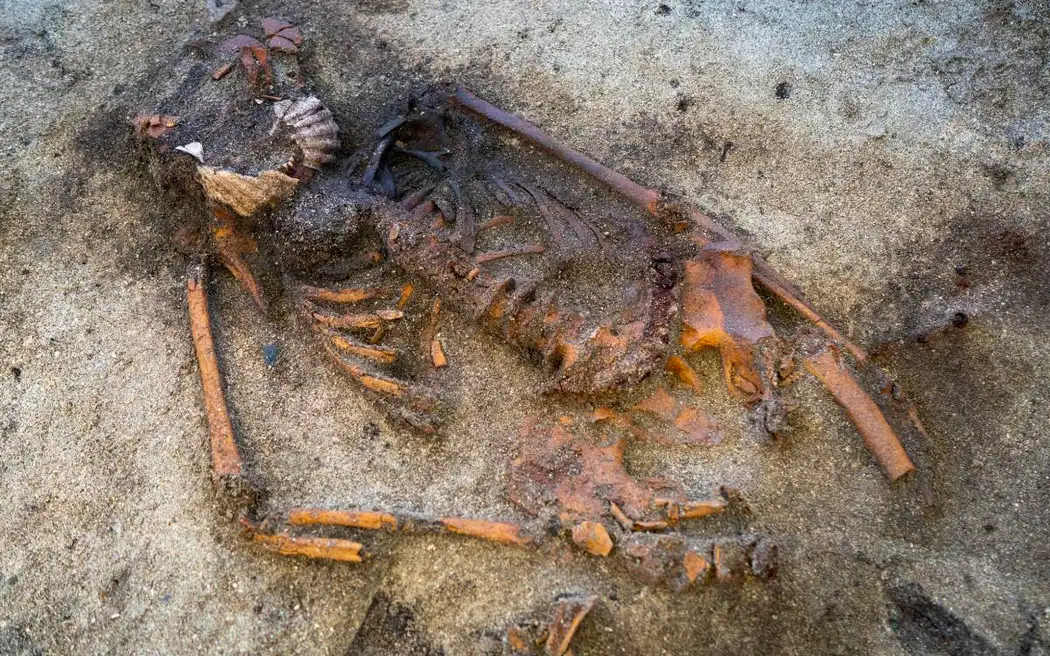
A symbolic and unusual Viking Age woman’s grave has been uncovered in Norway.
Roy Søreng, a local metal detectorist, discovered a historical brooch while surveying a field in the village of Bjugn in early 2025, prompting extensive archaeological work at the site. Initial findings suggested a grave might be nearby. Subsequent excavations revealed that the grave was indeed there.
Archaeologists from the Department of Archaeology and Cultural History at the Science Museum, part of the Norwegian University of Science and Technology, say the grave most likely dates back to the 9th century and that the deceased was a woman buried with textiles, jewelry and personal belongings typical of the period. However, the burial arrangement contains many unusual elements.
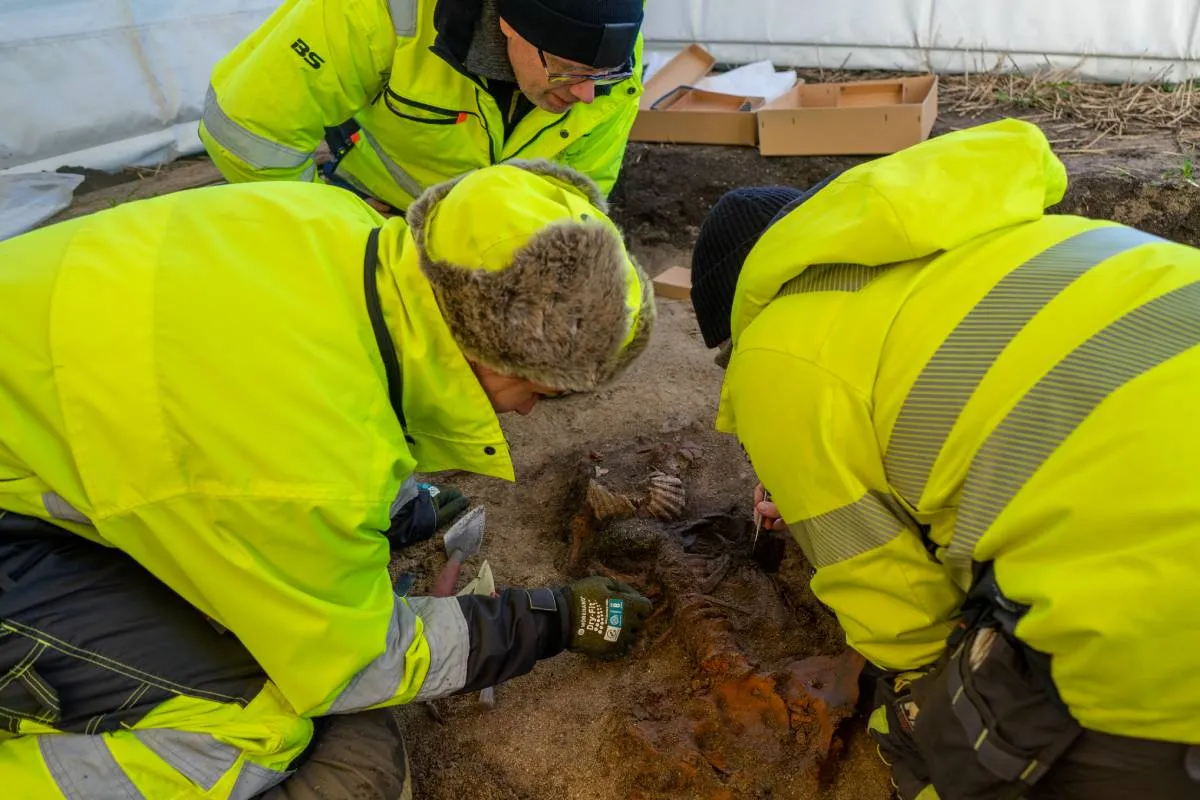
Image Credit: Raymond Sauvage / NTNU University Museum (CC BY-SA 4.0)
An Unusual Burial Arrangement
During the exhumation, two scallop shells were discovered in the mouth of the skull. This practice is reportedly quite unusual in pre-Christian Norway burials. It’s reported that the shells may have been placed for symbolic or ritual purposes, but the function of this practice remains unclear. Experts emphasize that scallop shells became widespread as a symbol of Christian pilgrimage in Europe in later periods, but this burial predates that tradition chronologically.
Thin bird bones were also identified near the grave. These bones are thought to belong to bird wings. The combination of such artifacts suggests that the ritual may have been unique. However, the researchers note that the current data does not allow for a definitive interpretation.
The research team will conduct DNA, age determination, pathology, and morphology analyses on the bones. The data obtained will reportedly provide information about the individual’s health, genetic characteristics, and possible family relationships. Specifically, they will investigate any family ties to the 8th-century skeleton previously found in the same field.
It was noted that the site was at risk of destruction due to agricultural activities, that the grave was located very close to the surface, and that another season of excavation would likely compromise the integrity of the skeleton. The landowner reportedly halted all operations until the work was completed.


