

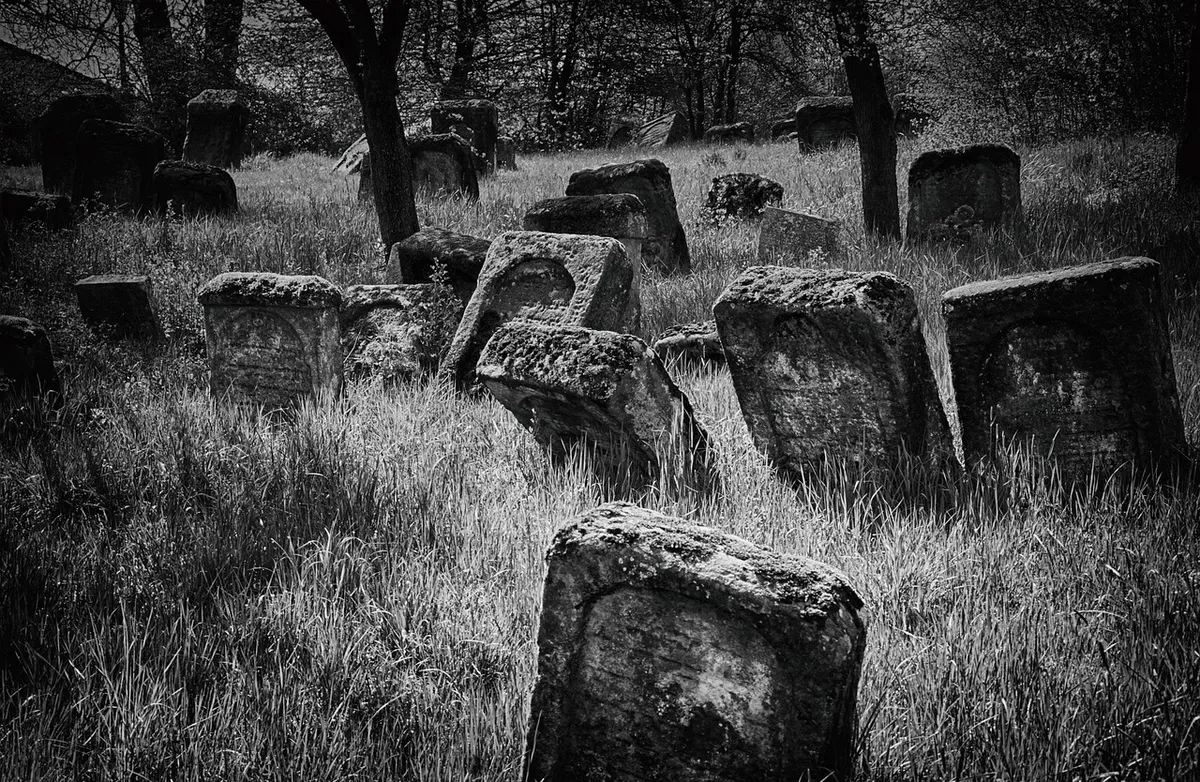
Corpses rising from their graves to haunt the living, revenants blamed for epidemics, and bodies dismembered and burned to prevent their return… In the Middle Ages, especially in Europe, the fear of revenants could lead to extremely harsh burial practices. Graves unearthed centuries later suggest that these fears may have been more deeply rooted than we might imagine.
How Did People Prevent the Dead from Rising in the Middle Ages?
In medieval Europe, death was not, in the eyes of some, a definitive boundary marking the end of the relationship between the living and the dead. The idea that a buried body could move again, return to its former home at night, even attack its relatives and bring disease to an entire settlement, appears in various narratives of the period.1
Traces of belief in revenants can be found in historical accounts written centuries ago and in archaeological discoveries. In an abandoned medieval village in northern England, dismembered and burned human remains have been unearthed.2
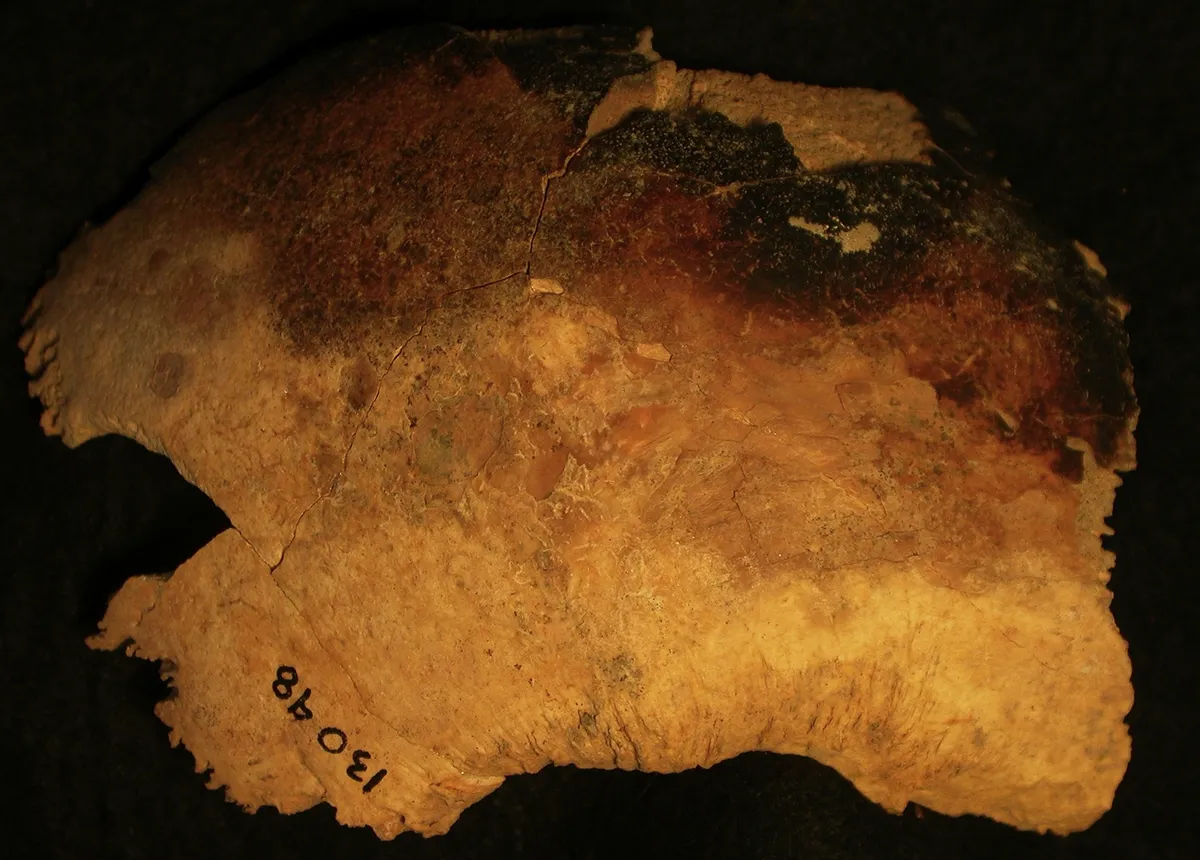
📷 Historic England
In some graves in Poland, sickles were placed across the necks of the deceased, heavy stones were laid over their bodies, and padlocks were attached to their toes, apparently out of fear that they might rise from the dead.
So, what caused people to fear their dead so much? How was it decided whether a corpse would return from its grave? What methods were used to prevent the dead from rising?
What Does Revenant Mean?
One of the most important concepts encountered in medieval European texts is “revenant.” This word, of French origin, generally means “one who returns.” In historical and folkloric contexts, it is used to describe individuals believed to return to the world of the living after death.
There are significant differences between the revenant and the modern image of the vampire. In modern literature and cinema, the vampire is mostly depicted as a blood-drinking creature with certain supernatural powers. The revenant in medieval narratives, however, appears in different forms. Sometimes it returns to its former home, sometimes it physically harms people, and sometimes it is seen as responsible for diseases and disasters in its settlement.
The fundamental difference between a revenant and a ghost is that while a ghost is generally considered a spirit independent of the body, the revenant, in many narratives, is the body itself, buried in the grave. What frightens the living is not the spirit of the dead, but the corpse, believed to be moving again.
However, there was no common and unchanging understanding of the revenant in medieval Europe. Regional folklore, religious beliefs, and social conditions produced different explanations. The extent to which the surviving stories reflect popular beliefs and the extent to which they reflect the worldview of educated clergymen continues to be debated among historians.3
William of Newburgh’s Accounts
 William of Newburgh, an Augustinian clergyman and historian who lived in England, included four narratives about the dead who were said to have returned from their graves in the fifth book of his work Historia Rerum Anglicarum, which he wrote at the end of the 12th century. In these stories, the appearance of the dead sometimes has great consequences, disrupting the peace of an entire settlement. People are unable to leave their homes at night, families are afraid to sleep, and the responsibility for epidemics is placed on a body thought to have emerged from its grave.1
One of the stories takes place in Buckinghamshire. It’s said that a dead man would come to his ex-wife’s bed at night, almost crushing her with his weight. The woman, along with her relatives, began to stay awake at night. However, it was believed that the danger hadn’t disappeared, and that the dead man was now disturbing other relatives.
Eventually, the matter was brought to church authorities. While it was suggested that the body be exhumed and cremated, Bishop Hugh of Lincoln opted for a different method. He ordered that a written inscription of forgiveness, which he had prepared himself, be placed on the deceased’s chest. According to William’s account, after this procedure, the dead man never reappeared.
The historical significance of the story is independent of whether the event actually happened. A clear distinction is made between the physical disposal of the body and the church’s intervention. The bishop’s suggestion reflects an approach that links the deceased’s restlessness to the idea of sin and forgiveness.
William’s other story, set in Berwick, is far more brutal. It tells of a wealthy man known for his wickedness during his lifetime, whose corpse is believed to wander at night, spreading disease. Upon this, ten young men open the grave, dismember the body, and burn it. In the narrative, the disposal of the corpse ends the horrors of the night. However, ironically, the plague in the city continues.
These stories, of course, do not prove that medieval people actually encountered resurrected corpses. However, they help us understand how the idea of the return of the dead was associated with concepts such as sin, social unrest, and disease.
What Methods Were Used to Prevent the Dead from Rising in the Middle Ages?
The belief that the dead could rise from their graves and harm the living led to the emergence of various interesting methods of self-preservation in different parts of Europe. Some believed they could eliminate this danger by dismembering the corpses, while others resorted to more symbolic methods. It seems that the fear of the dead was widespread, but there was no single universally accepted way to cope with it.
Beheading the Corpse
Decapitation is one of the harshest beheadings encountered in medieval narratives. The idea behind this practice was to prevent the deceased, believed to have returned from their grave, from moving again by disrupting their physical integrity.
A striking example can be found in Geoffrey of Burton’s The Life and Miracles of Saint Modwenna, written in the early 12th century. According to the narrative, two villagers fleeing from the village of Stapenhill take refuge in nearby Drakelow. Shortly afterward, the men die, and their bodies are taken back to their hometown and buried. But the story doesn’t end there. It recounts how the two dead men, carrying their coffins on their shoulders, arrive in Drakelow at night, knocking on the walls of houses and urging the living to come with them. A deadly plague breaks out in the village. Eventually, the survivors obtain permission from church officials to exhume the bodies. When the graves are opened, the bodies are found to be well-preserved. The men’s heads are severed and placed between their legs, and their hearts are removed and burned. According to Geoffrey’s account, these interventions bring an end to the horrific events in the village.4
The story illustrates how violence inflicted on the body after death can be seen as a form of self-protection. However, the discovery of a decapitated skeleton in excavations alone does not point to a fear of ghosts. Executions, war, punishment, or different burial customs can also leave similar archaeological traces.
Dismembering or Burning the Body
The dismemberment or cremation of a body exhumed from a grave appears in historical texts as a more definitive method of intervention. The aim here is to eliminate the physical presence of the deceased, who is believed to have returned. As seen in William of Newburgh’s account of Berwick, this process is sometimes carried out following fear and concerns about epidemics experienced by the community.
While this method is quite chilling to the modern reader, it can leave significant archaeological traces. Marks left on bones by cutting tools, deformations caused by high temperatures, and the manner in which the body is dismembered can be used to investigate the nature of interventions performed after death.

📷 Lublin Voivodeship Conservator of Monuments
Placing Protective oObjects Inside the Grave
Certain objects buried with the deceased’s body have been imbued with meanings that ward off evil. In archaeology and religious history studies, the term apotropaic is used for such protective practices.
In some graves documented in Eastern Europe after the Middle Ages, sharp agricultural tools, large stones, and locks have been found. The placement of these objects has been interpreted by some researchers as symbolic or physical barriers intended to prevent the deceased from leaving the grave.5
Applying to the Church
In the Middle Ages, the belief in revenants didn’t always result in the cremation of the body. The certificate of forgiveness in the Buckinghamshire story is a significant example of this. The Church often sought a solution not in interfering with the body, but in forgiving the sins of the deceased. This practice shows that the afterlife was also interpreted within the framework of Christian ideas such as sin, atonement, and the salvation of the soul.
Dismembered Bodies Found in England: The Mystery of Wharram Percy
One of the most remarkable archaeological investigations into medieval revenant beliefs was carried out in the abandoned village of Wharram Percy in North Yorkshire, England. Excavations there uncovered a pit containing numerous separated human bones. Scientific analyses of the remains were published in 2017.2
Researchers have determined that a total of 137 bones belong to at least ten different individuals. These include remains of children as young as two years old and adults over fifty. Radiocarbon dating predominantly points to the 11th–13th centuries.
Seventeen of the examined remains showed a total of 76 cuts, and at least 17 bones showed signs of low-temperature burning. Six long bones showed fractures that occurred close to the time of death.
A particularly noteworthy detail is the concentration of cuts in the upper parts of the body, especially around the head and neck.
Researchers initially considered several possibilities. One was that human flesh was consumed during periods of famine. However, the locations of the cuts on the bones did not match the expected distribution for processes aimed at separating the flesh from the body.
Another possibility was that the bodies belonged to outsiders and were therefore treated differently.
Examination of strontium isotopes in tooth enamel indicated that the individuals were most likely connected to the region. Researchers considered the possibility that these individuals may have grown up in Wharram Percy’s immediate vicinity or community.
Simon Mays, an osteoarchaeology expert working for Historic England, and his colleagues, interpreted the data as suggesting that the bodies may have been dismembered and burned to prevent them from returning to their graves. These findings are considered one of the first strong archaeological pieces of evidence for practices aimed at preventing the resurrection of corpses in the Middle Ages.6
Of course, this interpretation is not definitive. Researchers themselves acknowledge that alternative explanations cannot be entirely ruled out.
Nevertheless, the parallels between the physical marks on the bones and medieval beliefs about revenants have made Wharram Percy one of the most important archaeological examples on the subject.
Vampire Graves in Poland: Why Were Sickles Placed Across the Necks of the Dead?
While findings in England date back to the Middle Ages, some unusual burials in Poland suggest that similar fears persisted into later centuries. Excavations in the northwest of the country have uncovered six graves deviating from conventional burial practices among hundreds of human skeletons from the 17th and 18th centuries. Five of these individuals had sickles placed on their necks or abdomens. Two individuals had large stones under their chins.
Researchers suggest the sickles may have been placed to prevent the body from being harmed if it tried to rise from the grave. The stones have been interpreted as protective objects intended to silence the deceased or close their throats.
A 2014 study published in the journal PLOS ONE examined the geographical origins of the individuals in these graves. Lesley A. Gregoricka and colleagues compared strontium isotopes obtained from tooth enamel and determined that all six unusually buried individuals had values consistent with the region. Therefore, it seems unlikely that these individuals were considered dangerous simply because they were foreigners.7
Researchers have considered that the circumstances of death, social identity, or fears associated with epidemics may have played a role. However, it is not known with certainty which of these possibilities gave rise to the practices in these graves.
A Young Woman Buried with a Sickle Across Her Neck and a Padlock on Her Toe
A tomb discovered in 2022 in Mielec, northern Poland, has resurfaced in October 2026 with the publication of a new scientific study. The tomb contained the skeleton of a young woman, estimated to be around 17-19 years old. The woman, whom the research team refers to as Zosia, had a sharp sickle placed around her neck and a triangular padlock attached to the big toe of her left foot.
The multidisciplinary study, published by Dariusz Poliński and his colleagues from Nicolaus Copernicus University in Toruń, evaluated the structure of the tomb, the position of the skeleton, the characteristics of the objects, genetic data, and isotope analyses. According to the researchers, the padlock may have been placed when the young woman was first buried. The sickle, however, may have been added later when the tomb was opened. If this interpretation is correct, the fear felt after the woman’s death may have resurfaced over time, leading to a second alteration of the tomb.
Fabric fragments, believed to belong to the young woman’s headdress, are also noteworthy. Analyses revealed silk fabric along with decorative threads containing silver and gold. Researchers note that these findings suggest the woman may have held a relatively high social status.
Isotope data from the teeth indicate that she likely spent her childhood in the region where she was buried. Genetic findings suggest a possible Scandinavian ancestry in her family history. However, it has not been definitively proven that the woman herself migrated from another region.5
How to Tell If a Grave Is Really a Vampire Tomb?
In archaeology, graves that deviate from the usual burial order are examined as non-normative or unusual burials. However, this classification does not necessarily mean that the person lying in that grave is seen as a ghost or vampire.
At first glance, it may seem quite creepy that a skeleton is buried face down, its head is separated from its body, or heavy stones are placed on it. However, there may not always be a fear of ghosts behind such graves. Some practices may be related to punishment, some to local traditions, and some to other beliefs that we do not fully understand today.
That’s why archaeologists cannot reach a definitive conclusion by looking at a single object found in the grave or the posture of the skeleton. They examine many details such as how the body was buried, whether the grave was opened later, how different it was from other graves in the surrounding area, and whether similar practices were mentioned in written sources of the period.
For example, the combination of sharp tool marks and burns on some bones, the placement of sickles on the necks or abdomens of corpses, or the placing of a lock on the feet of a dead person suggest that there may have been interventions made to prevent the person in the grave from returning. Especially the similarity of such practices to the narratives of the period makes the connection with the belief in ghosts more meaningful.
Still, hundreds of years later, it is not easy to know for sure what people were thinking or why they acted the way they did. We can open a grave and examine the objects inside, and understand what was done to the body from the marks on the bones. However, it is not possible for us to reveal the fears, intentions and beliefs behind all these with the same precision.
Therefore, it is necessary to approach the expression “vampire grave”, which we frequently encounter today, with some caution. Looking for a fear of the resurrection of the dead behind every unusual grave may cause us to make the thoughts of people in the past seem simpler and more monotonous than they are.
Revenant Beliefs in Western Asia and Siberia
Beliefs that the dead could return were also found in Anatolia and various regions of Asia during the Middle Ages. However, these beliefs did not have the same characteristics everywhere. In the Byzantine world, which included Anatolia, it was particularly thought that the bodies of excommunicated individuals could remain undecayed. There were even accounts claiming that the body of Byzantine Emperor Michael VIII, who died in 1282, had not decayed. Some saw this as a sign that the emperor had suffered divine punishment due to his religious choices. In such narratives, the body’s natural failure to decompose was linked to the deceased’s spiritual state. However, it was not believed that every undecayed corpse would rise from its grave and wander.8
Beliefs about supernatural beings, referred to as revenants (hortlaks) and witches, had become widespread among Turkic communities in and around Anatolia. However, it is not easy to detail the forms these beliefs took in the Middle Ages. A significant portion of the clearer written documents on the subject belong to the Ottoman period, especially the 16th century and later. For example, among the questions posed to leading religious figures of the time was how to deal with corpses believed to move again after death. Some fatwas mentioned practices such as beheading or burning the corpse. However, most of these records were related to beliefs in Rumelia. Therefore, it would not be correct to consider them directly as general practices of medieval Anatolia.9
In Central Asian and Siberian Turkic folklore, malevolent beings called ubırs are noteworthy. Particularly among the Tatars, beliefs about ubırs depicted them as beings capable of possessing people, roaming at night, and transforming into different forms. While some stories associate them with dangerous entities that emerge after death, the characteristics of ubırs varied from region to region. In some communities, an ubır was treated in a more abstract way, such as a “spirit that brings disease,” while in others it was depicted as a “blood-sucking creature that emerges from the grave.” These narratives in Turkic folklore contain elements comparable to revenant and vampire beliefs in Europe. However, unfortunately, there is insufficient historical evidence to conclude that all known legends were told in the same way during the Middle Ages.10
- Joynes A. The ‘History of the Events of England’ of William of Newburgh. In: Medieval Ghost Stories: An Anthology of Miracles, Marvels and Prodigies. Boydell & Brewer; 2001:134-142.[↩][↩]
- Mays, S., Fryer, R., Pike, A. W. G., Cooper, M. J., & Marshall, P. (2017). A multidisciplinary study of a burnt and mutilated assemblage of human remains from a deserted mediaeval village in England. Journal of Archaeological Science: Reports, 16, 441-455.[↩][↩][↩]
- Gordon, S. (2015). Social monsters and the walking dead in William of Newburgh’s Historia rerum Anglicarum. Journal of Medieval History, 41(4), 446-465.[↩]
- Millinger, S. P. (2004). Life and Miracles of St. Modwenna. The Historian, 66(2), 388-390.[↩]
- Poliński, D., Zagrodzka, M., Grzybowski, T., Borrini, M., Lynch, P. A., Cybulska, M., … & Czyżewski, Ł. (2026). A unique, non-normative burial of a young adult female from a 17th-century cemetery in Pień, north-central Poland. A multidisciplinary approach. Journal of Archaeological Science: Reports, 74, 105967.[↩][↩]
- Historic England (2017, 3 Nisan). New Archaeological Evidence Throws Light on Efforts to Resist “the Living Dead” in Medieval England.[↩]
- Gregoricka, L. A., Betsinger, T. K., Scott, A. B., & Polcyn, M. (2014). Apotropaic practices and the undead: a biogeochemical assessment of deviant burials in post-medieval Poland. PloS one, 9(11), e113564.[↩]
- Nicol, D. M. (1971). The Byzantine reaction to the second Council of Lyons, 1274. Studies in Church History, 7, 113-146.[↩]
- Aycibin, Z. (2008). Osmanlı Devleti’nde cadılar üzerine bir değerlendirme. OTAM Ankara Üniversitesi Osmanlı Tarihi Araştırma ve Uygulama Merkezi Dergisi, 24(24), 55-70.[↩]
- Yaltırık, M. B. (2012). TÜRK KÜLTÜRÜNDE HORTLAK-CADI İNANIŞLARI. Tarih Okulu Dergisi, 2013(XVI).[↩]


